How long does a car battery last?
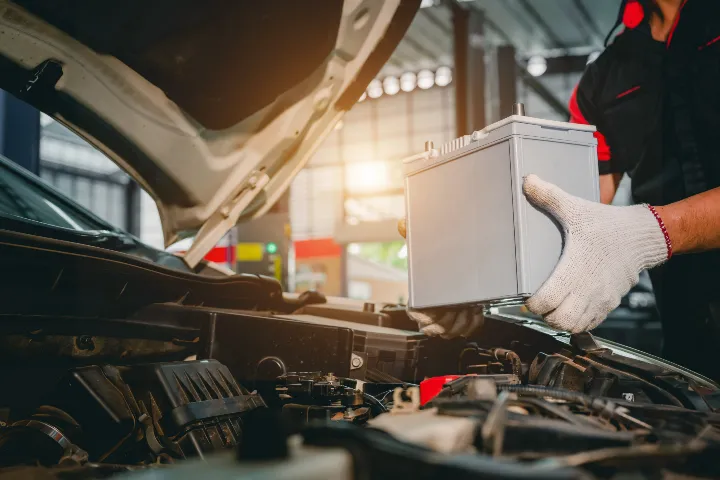
As much as we’d like them to, car batteries don’t last forever. Like other components of your vehicle, your car battery will gradually wear out over time, resulting in reduced efficiency and problems with powering your car. At this point, you’ll need to have the battery replaced with a new one – but how often will you have to do this?
How long do car batteries last?
There are many factors that can affect how long a car battery lasts before it needs to be replaced, but as a general rule, most last somewhere between three and six years. It can be a good idea to note down when your car battery was last replaced so you can keep an eye on when it may wear out.
So what can speed up the deterioration of your car battery? Well, one thing that commonly drains these batteries and reduces their overall longevity is leaving electrical components switched on unnecessarily. For instance, leaving the interior or exterior lights on after parking up, or leaving a phone or tablet plugged in and charging overnight.
Where you take your car can also be a factor. Here in the UK we get fairly standard temperatures across the country, so this shouldn’t make your car battery degrade too much quicker than anyone else’s, for example. However, if you regularly travel to a hotter climate with your car, this can bring your battery’s longevity down to the lower end of that three to six year estimate.
It’s also true that battery faults and incorrect maintenance can damage your car battery. For example, if you make an error when jump-starting your car, leave your battery on charge for a lot longer than it needs or install the wrong type of battery into your car, you can expect your battery to wear out quicker.
How to know if your car battery needs to be replaced
Knowing your battery will probably last between three and six years is one thing, but how can you tell when it actually needs replacing? One thing to do is to have your car serviced regularly, as the battery will be tested as part of this. If there’s an issue with your battery, your mechanic will give you their opinion and usually suggest what the best course of action would be to fix the problem.
If you aren’t due for a service any time soon, it can also be helpful to keep an eye out for warning signs that your battery’s health is deteriorating. Any abnormalities you notice about your vehicle could mean there’s a problem somewhere, so it’s a good idea to get it checked by a mechanic in any case. Below are three signs that could mean your battery is on its last legs.
Dashboard warning light
When it comes to vehicular faults, the array of warning lights and symbols on your dashboard is your friend. If you notice the battery symbol – this looks like a rectangle with plus and minus signs inside – lit up when starting the car or when driving, you should have a mechanic check your car as soon as possible.
An illuminated battery indicator doesn’t necessarily mean that the whole battery will need to be replaced, as it’s responsible for notifying you of issues with any part of the battery and charging systems. However, whatever the fault is, it could leave you stranded if you don’t address it.
Low or no power for electrical components
As well as providing ignition power to start the engine, your car’s battery also provides electricity for various other parts of the vehicle, such as the heater and air con, any electronic features such as windows or seats and the internal and external lights. Any weakness or loss of these systems could indicate a problem with your battery that should be checked out as soon as possible.
Ignition trouble
Your car’s engine is a powerful thing, but it needs a little bit of help getting started. The battery provides ignition power which cranks the engine into life to get you going. So, if you find it takes longer than usual to start your car – or you can’t start it at all – that’s a sign that you might be having battery problems.
If your battery doesn’t have enough power to start your car, you’ll have to jump start it. Then take it straight to a garage or autocentre to have the problem looked at by an expert.
As with the other warning signs discussed above, there are a few more issues that could cause problems with starting your car. For example, it can be harder to start the car in winter when it’s very cold. Testing your battery with a multimeter may help you to find out if there’s an issue – but if you’re at all concerned about your vehicle or battery health, the best thing you can do is to consult your local autocentre as soon as possible.
