How long does it take to change a cambelt?
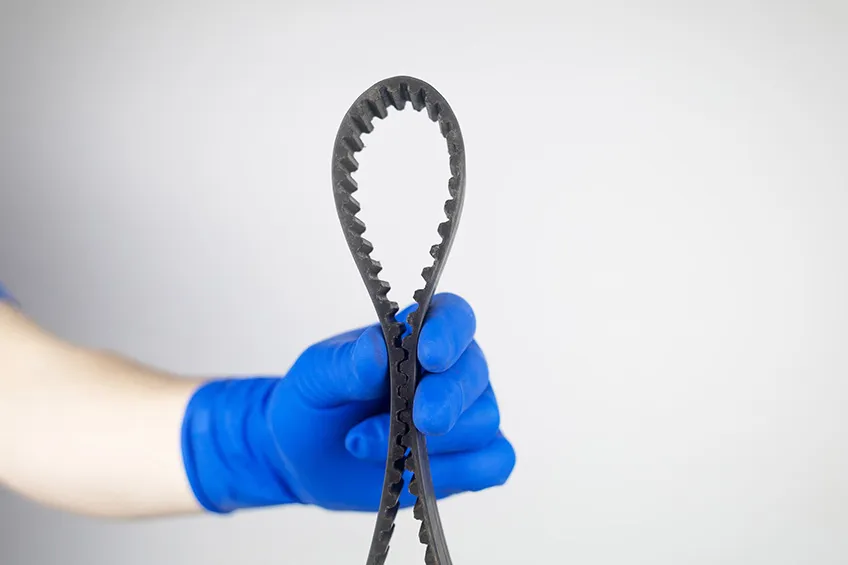
Getting your cambelt or timing belt changed is an essential part of vehicle maintenance to keep your car in good condition – and to keep yourself, your passengers and everyone else safe on the roads.
Below, we take a look at roughly how long it takes to change a cambelt, how long you can put it off before risking significant consequences and what would happen if the cambelt broke while you were at the wheel.
How long does it take to change a timing belt?
The short answer to this is that for most cars, changing the cambelt takes around four to six hours. However, the time it takes can vary depending on the model and make of car you have, for the simple reason that different cars have different under-bonnet layouts. In some cars, the cambelt might be easily accessible. In others, your mechanic may need to remove several components to give themself the space they need to do the job. Because of this, it can be helpful to ask your mechanic for a more specific time estimate once they’ve seen your car and got an idea of how long the replacement will take. By booking in your car for a cambelt replacement with Mr Clutch Autocentres, though, you can benefit from our fixed price cambelt replacement schedule. This means that the replacement will cost the same price regardless of how long it takes to complete, helping you to get the best value for your money.
Another thing that can affect how long it takes to replace a cambelt is whether you’re having anything else done at the same time. Sometimes mechanics will recommend having certain repairs or replacements paired together if the two components are located in the same area, as this means they only have to get down to that hard-to-reach area once instead of twice. For this reason, it’s not uncommon to have a new water pump fitted when your timing belt is replaced, as this saves you labour time and money compared to if you had the work done separately.
If you use your car a lot, particularly for work, you might be reluctant to put it in the garage for six hours or so to have the cambelt replaced. Unfortunately, holding off can put you at greater risk of the timing belt failing and causing serious problems.
How long can you drive with a bad timing belt?
Let’s say it’s nearly time to have your cambelt replaced, but you don’t want to put your car off the road for several hours to have the work done. You might wonder how long you can feasibly put off having the cambelt replaced before the risk becomes too great.
First of all, check your renewal date. It helps to be aware of when it’s coming up in advance so you can plan when you’ll have your timing belt replaced and fit it into your busy schedule. Although cambelts can wear out before the renewal date in extreme circumstances, it’s much less likely to happen. If you have at least an Interim Service booked in with Mr Clutch Autocentres, that will include checking the renewal date on your cambelt, so we’ll let you know if the date is coming up soon.
However, that’s not to say you should wait until the last minute to have your timing belt changed. Remember, garages and autocentres can be booked up in advance, so it’s a good idea to plan ahead to avoid disappointment.
If you’re thinking about putting off your cambelt replacement until after the due date, don’t. The renewal date is there for a reason to keep everyone on the road safe and save you money – because the cost of replacing a cambelt is nothing compared to the cost of repairing the damage a broken cambelt can do to your engine. In fact, a broken cambelt usually writes off the vehicle, making it more expensive to try to fix the damage than to just get a new car instead.
It’s also worth remembering that if you have a warranty or insurance policy covering you in the event of cambelt failure, it will be subject to you following maintenance guidelines. If your cambelt fails and you haven’t kept up to date with replacements, it’s unlikely you’ll see a payout to help with your costs.
Most importantly, if you notice any signs of wear and tear relating to your cambelt, it’s best to get it checked by a mechanic as soon as possible, regardless of how close the renewal date is. Damage to the cambelt could mean it’s going to break sooner rather than later.
What happens if the cambelt breaks while you’re driving?
You’ve heard that if the cambelt breaks, it can do serious damage to your engine. But what does that really mean?
Well, your cambelt is essentially a big rubber band that keeps the crankshaft and the camshaft in your car’s engine moving in sync. Looking at the bigger picture of the engine as a whole, the timing belt is responsible for maintaining the timing between the bottom and top halves of the engine.
So what happens when the cambelt breaks? That synchronicity is lost between the two halves of the engine, which can result in damage to the various components involved. Many cars have what is known as an ‘interference’ engine. This means that the valves and the pistons are designed to occupy the same space alternately – i.e. when the valves are present, the pistons aren’t, and vice versa.
It’s the same principle as having a shared car that one person uses during the night and the other during the day. The cambelt keeps that rhythm of alternation going smoothly, but if it breaks, the valves and the pistons will collide and damage one another – and that means nobody gets where they wanted to go. Typically, this kind of damage is too costly to repair, so the vehicle is written off.
In the long run, getting your cambelt replaced will save you time and money, as well as keeping everyone on the roads that much safer. Book into your local autocentre today.
