How long do tyres last?
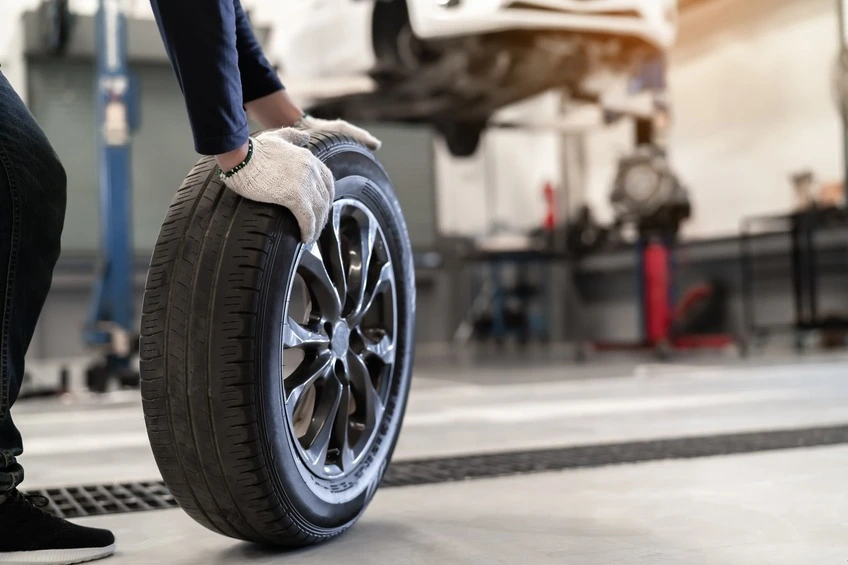
Worn down tyres don’t grip the road as effectively as their fresher counterparts, meaning your vehicle will take longer to stop and may slip more on wet surfaces. This makes it dangerous to drive with them, particularly in adverse conditions – so replacing your vehicle’s tyres on schedule is crucially important.
How long do car tyres last?
As with any vehicle component, the tyres on your vehicle will wear out differently depending on a wide range of factors, such as how you drive, where you drive and the quality of the tyres themselves.
Because of this, it’s good to know how to spot visible wear so you can keep an eye on when your tyres need to be replaced. However, guidelines can also be helpful.
What can be surprising if you’ve never learned about tyres before is that the front and back pairs don’t necessarily wear out at the same rate. In general, your front tyres should last for at least 20,000 miles, while your rear tyres could go to 40,000 miles.
How that translates into time of course depends on how often you use your car. Because of this, it’s recommended to check your tyres regularly, and also have your tyres checked annually by a professional mechanic who can spot any subtle signs of wear and tear you might miss. This can be done in a car service.
Additionally, it’s advisable to have your tyres replaced as a precaution once you’ve had them for ten years – even if there are no signs of damage. This helps to ensure you and others are safe on the road.
What can affect how long your tyres last?
As we’ve mentioned above, the length of time your tyres last isn’t a simple calculation of how many miles you’ve driven – other considerations come into play.
Type of tyre
The front and rear tyres can wear out at very different rates, as touched on earlier. Naturally, this can mean that you end up needing to replace your front tyres while the rear ones are still fine – which may not be how you prefer to do things.
An alternative is to introduce a rotation – i.e. switching out your front tyres for the rear ones so that no two tyres suffer the brunt of the wear all the time. This will mean that your rear tyres will likely wear out sooner than the 40,000 mile estimate, but can help to balance things out so you can replace all of your tyres at once rather than having two separate jobs.
Driving style
The way you drive can have a big impact on the wear your tyres experience – and this is one of the most significant causes of variation in wear rates since no two drivers have identical styles.
Techniques such as driving too fast, braking harshly and taking corners at speed can all affect your tyre health. Essentially, anything you can do to smooth out your driving experience will help to preserve your tyres.
Brand
Another point of variation is the manufacturing quality of the tyre. You may find that some brands seem to last longer than others – and it might not be the same for other vehicles. For example, you might prefer X brand, while your colleague prefers Y. This can come down to those other factors like driving style.
If your tyres are wearing out quicker than you’d like, it may be worth experimenting with different brands to see if that has any impact.
Maintenance
Proper tyre maintenance helps to keep them in good condition for longer – and that includes ensuring you don’t drive on under-pressurised tyres. As well as increasing your fuel consumption, under-inflated tyres are more likely to blow out or burst. If that happens, you’ll need a new tyre a lot sooner than expected.
It’s also worthwhile to regularly check your vehicle’s wheel alignment, as this can have a big impact on how your tyres sustain wear and tear. A misaligned wheel can lead to the tyre wearing out more quickly on one side than the other, so the tyre becomes unroadworthy faster than it would have if the wheels were properly aligned and the tyres wearing evenly.
A skilled mechanic can check the alignment of your wheels for you and, if needed, make any adjustments to ensure you get the most wear out of your tyres to avoid having to replace them earlier than expected.
Driving surfaces
Wear to your tyres is predominantly caused by friction between the tyre itself and the road surface, so it’s only natural that rougher, more abrasive road surfaces cause more wear than smooth ones.
Now, you probably don’t have much control over what the roads you’re driving on are like in general, but you may be able to give your tyres some respite at times by avoiding potholes where it’s safe to do so, and not going off the beaten track regularly.
Alternatively, if you need to travel on rougher terrains, you may want to look into tougher tyres that are designed for those surfaces so you won’t have to replace them so often.
At the end of the day, you can’t completely prevent your tyres from wearing out, but there are things you can do to avoid encouraging it. Whether you’re worried about the speed of wear on your tyres or you just want to have them checked over by a pro, pop down to your local autocentre and a mechanic will be happy to help.
UPDATED
