How to check the oil level in your gearbox
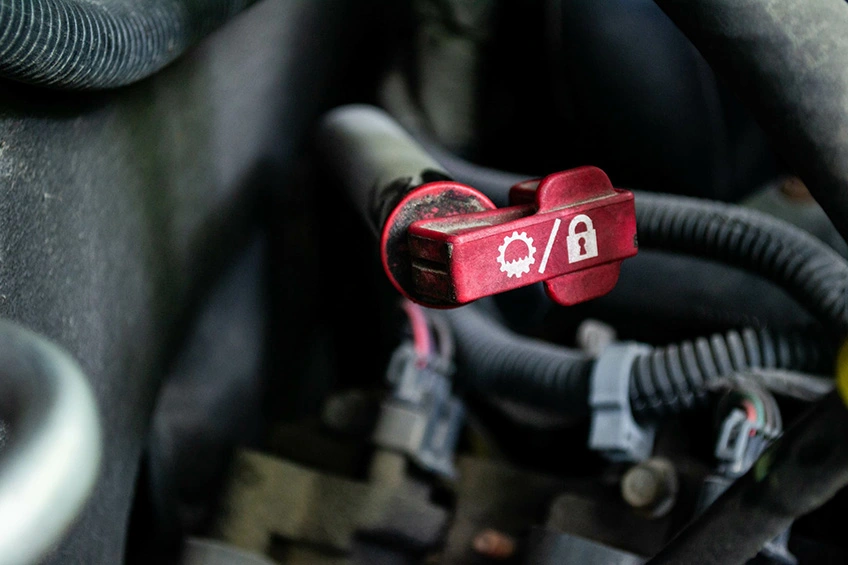
The gearbox houses a number of components necessary to allow your vehicle to change gear, making it vital for safe driving. These components interact with one another, and to do so, they need to be well lubricated.
That’s where gearbox oil comes in. Some components sit in the oil, while others get lubricated by making contact with the oil on those components. This helps to keep everything running smoothly – but if your gearbox oil level runs too low, it could lead to friction within the system.
Below, we explore how to check and maintain your gearbox oil level.
When to check your gearbox oil levels
Most manual gearboxes need an oil change roughly every 30,000 to 50,000 miles, while automatic gearboxes can be done every 60,000 to 100,000 miles. If all is well within your vehicle, you shouldn’t need to top up your oil level between these changes – and if you do, it could mean there’s a leak.
However, that doesn’t mean you should only check the oil level every 30,000 miles or longer. If your gearbox oil runs low, it can cause serious damage to your vehicle’s transmission, so you want to catch any problems sooner rather than later.
The general recommendation is to check your gearbox oil every few weeks or, at the least, every month alongside other fluid checks. That way, you stand a better chance of catching problems before they cause irreparable damage.
How to check your gearbox oil level
In some cases, you will be able to check your vehicle’s gearbox oil by using the dipstick method, where you can access the oil tank under the bonnet. Alternatively, other cars have a sealed transmission system which involves getting underneath the car to check the oil. This is best done by a mechanic with a hydraulic lift during a vehicle service.
So, what exactly do you need to do in order to check the oil level?
- Park on a level surface in a safe location
It’s very important to park somewhere that’s flat and level, as any kind of gradient can cause the readings you take to be flawed. Think of it like trying to read how much fluid is in a tilted measuring jug.
Before turning the engine off, allow your vehicle to idle in neutral with the handbrake engaged for about five to 10 minutes. This warms the engine and ensures you get a more accurate reading of what the oil levels are like when the engine is in use rather than when stationary.
Important! Do not measure oil levels while the engine is hot, as you could easily sustain severe burns. Always be cautious around a warm engine, and don’t open any caps until the oil has had time to cool slightly.
- Turn the engine off, open the bonnet and locate the gearbox oil dipstick
The exact location of the gearbox oil dipstick varies between different makes and models, so if you’re working with a car you haven’t got much experience with, it might not be where you expect it to be.
If you’re having trouble locating the gearbox oil dipstick, consult the owner’s manual. This should tell you exactly where to find it. Failing that, you could bring your vehicle to your local autocentre. There, a mechanic will be able to help you identify the gearbox oil dipstick, and can help you if your oil needs changing.
- Take the dipstick out and wipe it clean
The dipstick features indicators along its length that show you how much oil is in the tank. When driving, this sloshes about and so the oil can splatter above the actual level of what’s in the tank. So, by wiping it clean, you help yourself to take a more accurate reading.
- Reinsert the dipstick and take it out again
This time, the oil on the stick should show you how much oil there is in the tank. In most cases, there’s an indicator on the stick to signify the maximum level acceptable, and there may also be a minimum.
- If needed, top up your gearbox oil
If your oil is close to the minimum level, or it’s simply not very close to the maximum, use a funnel to top it up. Remember to add small amounts at a time and keep checking the level using the method detailed above to avoid filling it up too high.
Important! Always remember to check that you have the right gearbox oil for your vehicle before topping up your levels. See the next heading for more details.
As mentioned above, your gearbox oil level shouldn’t fall too much between oil changes. So, if you notice the level has fallen since the last time you checked, that could mean there’s a leak somewhere in your vehicle and you’ll need to take your car to be checked out by a qualified mechanic.
What gearbox oil do I need?
Although we use ‘gearbox oil’ as a catchall term for the lubricant that helps your gearbox to function, there are actually lots of different types of gearbox oil – and getting the right one is important to ensure the best performance from your vehicle. Here are some of the variables to consider:
- Manual versus automatic transmission – if you drive a manual, you’ll need manual transmission fluid (MTF). An automatic uses automatic transmission fluid (ATF).
- Differential and transfer case fluids – these are oils designed for specific components within the gearbox and may lead to boosted performance.
- High versus low viscosity – the viscosity (thickness) of the oil can impact how well it flows and withstands heat. Generally, higher viscosity oils are for manual transmission, while lower viscosity fluids suit automatics better.
- Synthetic versus conventional oil – synthetic oils can be finetuned for specific purposes, but may be more expensive than conventional alternatives.
If all that seems like a lot of decisions to make, don’t worry. Your owner’s manual should specify the right kind of oil to get for your vehicle’s gearbox, so all you need to do is follow its instructions.
How much gearbox oil do I need?
When a full oil change is required, you can expect to use around three to four litres of oil, but you shouldn’t need to top up your gearbox oil by anywhere near that much when performing regular fluid checks.
It’s up to you whether you want to keep some gearbox oil suitable for your vehicle within your car maintenance kit. It can be handy to have some if you do need to top it up, but many people find they rarely have to do so.
Alternatively, you may find it simpler to only buy gearbox oil when you need it. However, remember that low oil levels can damage your vehicle’s transmission, so it’s not something you want to be putting off for long durations. Get it done sooner rather than later, and speak to an autocentre if you have any concerns about your gearbox.
UPDATED
