What are Clutch Master Cylinders and Clutch Slave Cylinders?
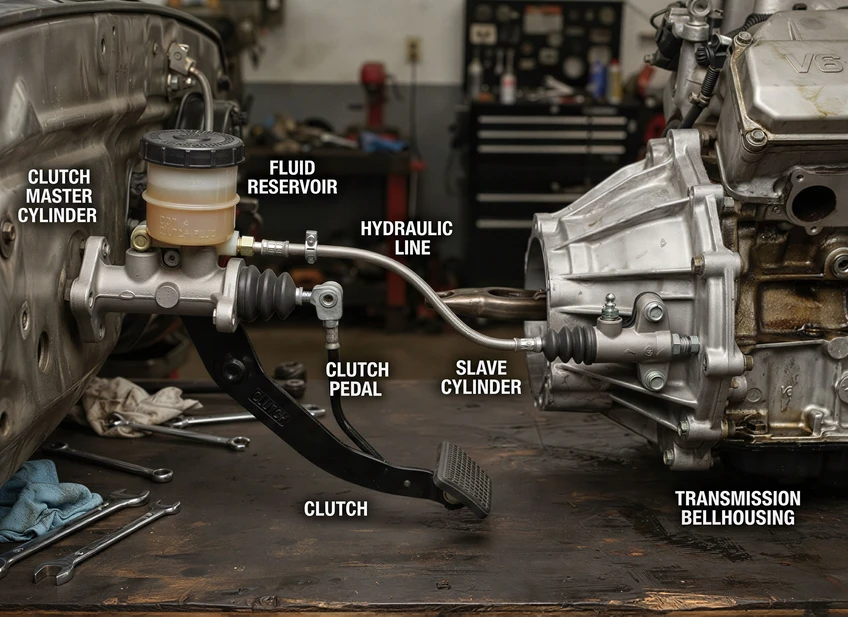
In a manual car, the clutch master cylinder and clutch slave cylinder work together to turn your foot pressure on the pedal into the movement needed to disengage the clutch. When either part begins to fail, the signs can feel vague at first: a soft pedal, awkward gear changes, a low biting point or a small patch of fluid under the vehicle. Understanding the difference between the two cylinders makes it much easier to spot trouble early and decide whether you need bleeding, clutch master cylinder repair, clutch slave cylinder repair or full replacement.
What does a clutch master cylinder do?
A clutch master cylinder converts mechanical movement from the clutch pedal into hydraulic pressure. When you press the pedal, a push rod moves a piston inside the cylinder, forcing clutch fluid through a hydraulic line towards the clutch slave cylinder. That pressure is what allows the clutch mechanism to disengage, so you can change gear smoothly.
On many vehicles, the clutch master cylinder is mounted on the bulkhead in the engine bay, often near the brake master cylinder. It is usually linked to the clutch pedal inside the cabin by a rod or linkage. Some systems share fluid from the brake fluid reservoir, while others have a dedicated clutch reservoir, so the exact layout depends on the vehicle.
Because it sits at the start of the hydraulic system, a failing master cylinder can affect the whole clutch feel. If it cannot build or hold pressure, the pedal may sink, feel spongy, return slowly or fail to disengage the clutch fully.
What does a clutch slave cylinder do?
The clutch slave cylinder sits at the other end of the hydraulic system. Its job is to receive pressure from the master cylinder and convert that pressure back into mechanical movement. This movement operates the clutch fork or release bearing, depending on the design of the vehicle.
A traditional external slave cylinder is usually mounted on or near the gearbox and pushes a clutch fork. Some vehicles use a concentric slave cylinder, which sits inside the bell housing around the gearbox input shaft. This internal design can work very effectively, but it often means more labour if replacement is needed because the gearbox may have to be removed.
What is the difference between a clutch master cylinder and a clutch slave cylinder?
A simple way to separate the two roles is this: the clutch master cylinder creates hydraulic pressure, while the clutch slave cylinder uses that pressure to move the clutch release mechanism. If one side of the system fails, the result is often the same for the driver: poor clutch disengagement and difficult gear changes.
Common symptoms of hydraulic clutch failure
Clutch hydraulic faults rarely improve on their own. A minor change in pedal feel can quickly become a car that will not select gears properly, especially in traffic or when starting from cold. Watch for these warning signs:
- Soft, spongy or sinking clutch pedal: This often suggests air in the system, internal seal wear or loss of hydraulic pressure.
- Difficulty selecting gears: If the clutch is not disengaging fully, first gear and reverse may become especially awkward.
- Low or changing biting point: An inconsistent bite can point to fluid pressure problems or air trapped in the hydraulic line.
- Low clutch or brake fluid level: Fluid loss means there is likely a leak somewhere in the system.
- Fluid around the pedal, bulkhead or gearbox: Dampness near the master cylinder, hydraulic lines or slave cylinder deserves immediate attention.
- Discoloured or dirty fluid: Old fluid can absorb moisture, encouraging corrosion and seal wear inside the cylinders.
These symptoms can overlap with worn clutch components, gearbox issues or cable problems on non-hydraulic systems. However, if the pedal feel changes at the same time as gear selection becomes difficult, the hydraulic system is a sensible place to start.
Why do clutch master cylinders and clutch slave cylinders fail?
Most failures come down to wear, contamination, age or poor hydraulic pressure. The seals inside both cylinders are constantly moving against metal surfaces, so they eventually harden, wear or allow fluid to bypass the piston. When that happens, the system may look full of fluid but still fail to build enough pressure.
Moisture is another common enemy. Clutch fluid is usually hygroscopic, meaning it can absorb water over time. That moisture can contribute to corrosion inside the cylinder bore and reduce the effectiveness of the fluid. Dirt or degraded rubber particles can also damage seals and restrict smooth piston movement.
Air in the system is not always a component failure, but it can create similar symptoms. Air compresses more easily than fluid, which is why the pedal can feel springy or inconsistent. This is why bleeding is often the first repair step after leaks, part replacement or fluid loss.
Simple checks before booking a repair
You do not need to dismantle the clutch system to do a few useful checks. If the vehicle is safe to inspect and parked on level ground, these steps can help you describe the fault more clearly to a mechanic or decide whether a DIY repair is realistic.
- Check the fluid level. Look at the clutch or shared brake fluid reservoir. If it is low, do not just top it up and ignore it; find out where the fluid went.
- Inspect around the master cylinder. Look for dampness inside the cabin near the clutch pedal and in the engine bay around the bulkhead.
- Inspect the slave cylinder area. If it is external, check around the gearbox for wetness, drips or peeling paint caused by fluid.
- Press the clutch pedal slowly. A pedal that sinks to the floor, returns slowly or changes feel between presses may indicate pressure loss.
- Look at the fluid condition. Very dark or dirty fluid suggests the system may need flushing as well as diagnosis.
- Avoid forcing gears. If the car resists gear selection, forcing the lever can put unnecessary strain on gearbox components.
If the pedal suddenly loses pressure or you cannot disengage the clutch properly, it is usually safer not to drive. A failed hydraulic clutch can leave you stuck in gear, unable to pull away safely or unable to select neutral when needed.
Repair, replacement and maintenance options
Clutch master cylinder repair or clutch slave cylinder repair often starts with confirming whether the problem is air, leakage or internal seal failure. If the issue is simply trapped air after previous work, bleeding the system may restore proper pedal feel. Bleeding removes air bubbles and replaces old fluid with clean fluid, helping the hydraulic system transmit pressure correctly.
If a cylinder is leaking or bypassing internally, replacement is normally more reliable than trying to rebuild it, especially on everyday road cars. External slave cylinders are often simpler to access, while internal concentric slave cylinders can involve more labour because of their position inside the gearbox bell housing. The master cylinder may also require work under the dashboard as well as in the engine bay, depending on how it is mounted.
Costs vary with vehicle design, parts quality and labour time. As a broad guide, replacement work may fall somewhere around £140 to £450, while parts alone can range from budget options at around £30 upwards to premium parts above £150. Treat these as rough planning figures rather than a quote, because access and vehicle layout can change the job significantly.
For longer component life, it helps to:
- Replace clutch fluid at sensible service intervals if your vehicle schedule recommends it.
- Fix leaks promptly instead of repeatedly topping up the reservoir.
- Use the correct fluid specification for the vehicle.
- Avoid resting your foot on the clutch pedal while driving.
- Have both master and slave cylinder condition checked if one has failed through age or contamination.
The key takeaway for drivers
The clutch master cylinder and clutch slave cylinder are small parts with a big role in manual driving. One creates hydraulic pressure; the other converts that pressure into clutch movement. When they work properly, gear changes feel natural and predictable. When they fail, the car can become difficult or unsafe to drive.
If you notice a soft pedal, low fluid, leaks, discoloured fluid or stubborn gear changes, do not wait for the problem to become complete clutch failure. A careful inspection, correct bleeding and timely repair can protect the gearbox, reduce inconvenience and keep the vehicle much easier to drive.
Here at Mr Clutch Autocentres, we can help to diagnose, repair and replace both clutch master cylinders and clutch slave cylinders. If you need help with either, get in touch with your local branch today.
UPDATED
